If I Did Make New Year’s Resolutions

I consider myself an agnostic in the New Year’s resolution realm. It seems foolish to make them in the sense that why structure around a date on the calendar committing to what we already know we should be doing?  On the other hand, it seems even more foolish to avoid using any momentum one can to help one do what one should…  So were I to make New Year’s resolutions what would they be?

First is to drink more water.  A couple of years ago I bought my first Camelbak water bottle. Eventually I figured out that I needed one at work and one at home since I spend lots of time in both places. Then I figured out that I should really be drinking three bottles of water per day so I bought a third one figuring that if I started the day with three full ones I might have a chance. I haven’t yet focused on this enough to be successful but I guess it’s good to have the tools in place. A colleague of mine who lost about 50 pounds and looks great told me she drinks a half ounce of water for each pound of body weight per day. I can see how that would be helpful in keeping one’s appetite under control and feeling hydrated. If I have to focus on filling a bottle at any time during the day when I have better things to think about–and that would be always–I am more likely to fail so the game plan is to have three full bottles at the start of each day and have drunk them by the end of the day.

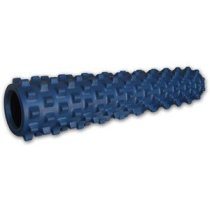
Second quasi-resolution is to use my Rumble Roller daily.  I’ve used it about 10 to 15 minutes for the last two days and I already feel better. When I don’t do some sort of flexibility work my body quickly becomes stressed and crunchy feeling. I know that certain aches and pains are secondary symptoms of muscle tightness and that rolling will fix ’em. I know that as I roll more I can reduce pressure points and that rolling itself will feel better. If I want to go for the gold standard on this one it will be rolling my illiotibial band. Right now it’s so painful when I do that that I come close to seeing stars. I am sure my body would benefit considerably from that area of my body being less irritated. A couple of useful resources for how to foam roll are Jeff Alexander’s instructions for scaled myofascial release on you tube using a wall for things that would be too painful to do on the floor. (Sheesh that sounds bad.) Another helpful video was a longer and more thorough introduction to using a Rumble Roller by Coach Charles Staley.

Third would be actually taking the dietary supplements I aim to take. I measure them all out into little boxes each day for AM and PM. Just got

English: Damavand Mineral Water bottle

Drink .5 oz/lb bodyweight /day

to remember to get them down the hatch. The things I do try to take were inspired by recommendations of the “You Docs” Mehmet Oz and Jeffrey Roizen in their book You: The Owners Manual.

That’s probably enough for this year. I don’t feel like I have to resolve to exercise because I feel pretty motivated to do that.
Things Aren’t Always What They Seem

Rumble Roller

Rumble Roller

A couple of summers ago I was letting an arm injury heal and found myself doing run/walk intervals and core work as a way to work out. One thing I noticed at the time is that my knees were killing me after running; and we’re not even talking about “running running” here but rather like 1 minute running followed by 2 minutes of walking repeated.  When I finally sought a consultation on my arm from a sports medicine physician I thought I’d get a ruling on my knees at the same time. I was pleased to find out there wasn’t really much of anything wrong with them for a person my age. The feedback I received is that my problem, rather than being anything intrinsic to my knees, had more to do with a lack of core strength; that is, it had more to do with my gait than my knees.

Since this experience I do think about whether aches and pains are signs of injury or secondary symptoms of other problems. Recently a few issues seem to be cropping up that are a result of muscle tightness in my legs and hips. I am here to report that the imperative to stretch apparently is greater as we age. I’ve always been a tense person and held a lot of tension in my shoulders etc. but the advent of low body tightness is new.

In her book The Female Body Breakthrough, Rachel Cosgrove recommends using a foam roller regularly; in particular on days one is not working out. I have a scary one called a Rumble Roller.  It really is like getting a deep tissue massage–sort of. Something I know I should do and don’t is to foam roll more; ideally every day I don’t work out.  As it is I only stretch when I work out so if working out gets disrupted so does stretching. Not helpful.

Warming Up

Rubber Bands

Gotta Stretch

Warming up always seems like it adds time I don’t have to my workouts. So I go into it with a slightly jaundiced attitude. This despite that I’ve seen over the years that stretching absolutely helps me continue to progress without injury in meeting my workout goals.

I am old enough to remember when static stretching was practiced.  But even as far back as the 1980’s we knew that ballistic stretching was a bad thing. What was promoted at the time was stretches you held for 30 seconds or longer.  You can now buy the 30th Anniversary edition of  Bob Anderson’s classic book that was the bible on this topic.

The most useful innovation I’ve encountered regarding warming up is the concept of dynamic stretching. Frankly, it looks funny but it seems to work.  The chief promulgators of this that have impressed me are Eric Cressey and Mike Robertson who market their knowledge via  the Magnificent Mobility website. To me a longtime hobbyist and layperson, they really seem to know what they’re talking about. Most of their information is available via subscription but there is also free information under the heading “dynamic stretching” on You Tube including warm up routines specific to different kinds of training. The website Sports Fitness Advisor has a simple set of exercises with handy moving diagrams.

The point of this type of stretching is that it is done through movement. Rather than just being stretches, dynamic stretches are themselves exercises that not only contribute to mobility but also begin warming up the body in advance of working out. At least six different stretches should form the start of your workout and become an integral part your exercise program each time you hit the gym